Neurobiology of Learning
Cancer Biology
Carcinogenesis is the final result of a gradual reconfiguration of a variety of circuits of signaling pathways and the accumulation of multiple mutations in signaling components associated with enhanced cell proliferation and reduced apoptosis. Cancer arises from different combinations of activated oncogenes, inactivated suppressor genes and the emergence of anti-apoptotic mechanisms. Most human cancer cells accumulate genetic changes rapidly and become genetically unstable. Genetic instability is enhanced when changes in DNA alter the epigenetic control mechanisms. Normal cell proliferation is regulated by a plurality of positive and negative signaling pathways. The positive signals are provided by the proto-oncogenes, and the inhibitory signals from the promoters of tumor and anti-apoptotic signaling pathways. The mutations in proto-oncogenes convert these genes into constitutively activated oncogenes and lead to the continuous stimulation of the cell cycle. To contribute a tumor suppressor gene in carcinogenesis it must lose its activity, in contrast to oncogenes, inducing cancer formation.
Cancer cells have an active role in supporting the adjacent stromal cells when creating a tumor. One mechanism for this process is the effective blood flow through neo-angiogenesis. In this way, the proliferating tumor cells depend on the specific stromal cells leading to the simultaneous growth of the tumor and the stroma. Epigenetic mechanisms such as methylation of DNA, modifications of histones and action of small RNAs are associated with tumorigenicity, as the modified genetic material may alter normal to cancer cells.
Cancer is organized in a hierarchical manner, with rare stem cancer cells, which have the potential of self-renewal, remaining at the top of the hierarchy and being responsible for the maintenance of tumor cells. On the other hand environmental factors, such as chemicals, ultraviolet radiation, X-rays, and oncogenic DNA or RNA-viruses accelerate the appearance of most cancers.
Molecular Medicine
Molecular Medicine is an interdisciplinary approach to human biological processes that integrates and applies the new achievements of the basic biomedical sciences and biotechnology in understanding, diagnosis and treatment of human diseases.
Molecular Medicine emphasizes the importance of elucidating the role of molecular mechanisms and genetic information in health and disease at the cellular and/or molecular level, examines how various diseases can be prevented and is based on research that shows how certain genes, molecules, and cellular signalling networks may become abnormal in diseases such as asthma, diabetes, heart disease, obesity, cancer.
The description of physiology and disease in molecular terms and the ability of the interpretation of individual susceptibility to specific diseases are now an ever-expanding field of medical science, which should be incorporated both in undergraduate curricula and in the training portfolio of new doctors, as Molecular Medicine focuses on the understanding of the role of molecular mechanisms and the genetic information in health and in disease.
The incorporation of molecular medicine in medical practice can be performed by implementing specialized training programs to develop skills that will be related with the proper diagnosis, assessment of prognosis and the best available treatment option. This training is part of an ongoing learning process that offers understanding of new developments and assimilation of emerging technologies in the changing field of modern medicine.
Cancer Immunology & Immunotherapy
The relation of the immune system with cancer is known for many decades. Harnessing the host immune response to specifically target tumor cells holds promise as a strategy to fight cancer. Although the potential of this strategy remains solid, the approach still requires optimization. Current approaches in cancer immunotherapy include the use of antibodies, cytokines, tumor antigen vaccines, dendritic cells, T cells and NK cells.
So far "passive" immunotherapy has experienced the greatest success, with antibody and cytokine therapies leading the way and being already established in the clinical setting.
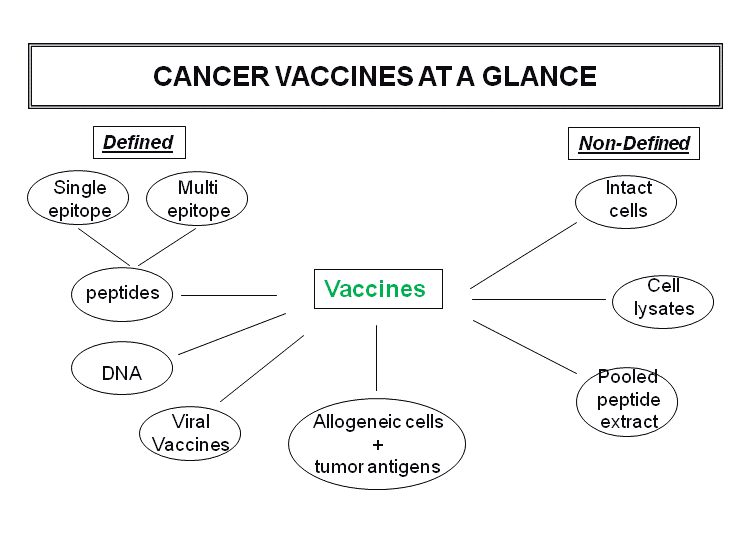 The first vaccine approved by the FDA on April 2010 is PROVENGE®(Sipuleucel-T) (Dendreon) for asymptomatic or minimally symptomatic metastatic castrate-resistant (hormone-refractory) prostate cancer patients. Sipuleucel-T is a cellular immunotherapy consisting of autologous peripheral blood mononuclear cells (PBMCs), obtained by leukapheresis and cultured (activated) with a recombinant human protein (PAP-GM-CSF) consisting of prostatic acid phosphatase linked to granulocyte-macrophage colony-stimulating factor. The median survival time for Sipuleucel-T patients was 25.8 months comparing to 21.7 months for placebo-treated patients. Overall survival was statistically significant (p= 0.032).
Education - Training
Education and training in molecular medicine combines rigorous didactic training in the basic biomedical sciences with exposure to concepts and knowledge underlying the molecular basis of the most common diseases. Candidates should undergo training in the core concepts of molecular biology, cell biology, biochemistry, genetics, and related biomedical sciences. Furthermore, trainees in biomedical research should have specialized required courses such as pathophysiology and molecular pathogenesis, and program activities, such as seminar series or journal clubs, which would provide them with a better understanding of disease mechanisms. Other parameters that would enhance training in molecular medicine and biomedical research include dual mentors in both basic and clinical science, and exposure to the concepts of medicine through participation in grand rounds or autopsy internships.
Training faculty should be broadly drawn from multiple disciplines and thesis research topics should reflect a broad range of interdisciplinary opportunities in molecular medicine. The goal is to train a cadre of scientists prepared to work at the interface of basic biomedical science and clinical research, an area sometimes referred to as translational biomedical research. This training opportunity should be primarily designed for M.D. and/or Ph.D. doctoral candidates who are interested in such a program as well as other scientists such as biologists and pharmacists.
Education and training in molecular medicine and biomedical research is a main objective of I.M.B.E. Candidates that could benefit from training in novel techniques of molecular medicine, include medical students and new doctors in specialties that involve relevant fields of biochemical research. Initially, we will post descriptions of the molecular techniques that are most frequently utilized nowadays in current medical practice. Thereafter, in order for scientists to become more familiar with these techniques we will organize relevant courses and workshops.
The Institute
Newsletter
Contact
Email: info@imibe.org